Congress was designed to make laws through deliberation. Members were expected to study proposals, hear testimony, debate alternatives, offer amendments, and vote after legislation had received serious examination. Much of that work traditionally took place through a process known as regular order.
Regular order gives committees an important role in developing legislation. A bill is referred to the committee responsible for its subject. Hearings allow experts, government officials, and interested citizens to provide testimony. Committee members debate the proposal, offer amendments, and vote on whether it should advance.
Once legislation reaches the floor, members have opportunities to debate it, consider amendments, and cast recorded votes. If the House and Senate pass different versions, differences can be resolved before both chambers vote on the final legislation.
This process takes time, but that is partly the point.
Legislation affecting millions of citizens and trillions of dollars deserves examination. Committees allow members with knowledge of particular subjects to contribute their expertise. Hearings expose proposals to questions and criticism. Debate gives opposing viewpoints a place in the process. Amendments allow weaknesses to be corrected before a bill becomes law.
In recent decades, regular order has lost much of its influence.
More authority has become concentrated among congressional leaders. Major legislation can be assembled by a relatively small group and presented to members under tight schedules. Large bills may combine numerous subjects, leaving members with limited opportunities to examine every provision carefully.
When committees lose influence, individual members also lose influence. Legislators elected to participate in making laws can find themselves choosing between supporting leadership decisions or opposing their own party.
This can deepen frustration within Congress and strengthen party conflict. It can also reduce transparency for citizens who want to know how legislation was developed, what alternatives were considered, and why particular provisions were included.
Regular order will not eliminate political disagreement. Congress is supposed to contain disagreement. The value of the process is that disagreement must pass through hearings, discussion, negotiation, amendments, and votes before becoming law.
Restoring greater use of regular order could strengthen committees, distribute responsibility among more members, encourage compromise, and reduce the concentration of legislative power.
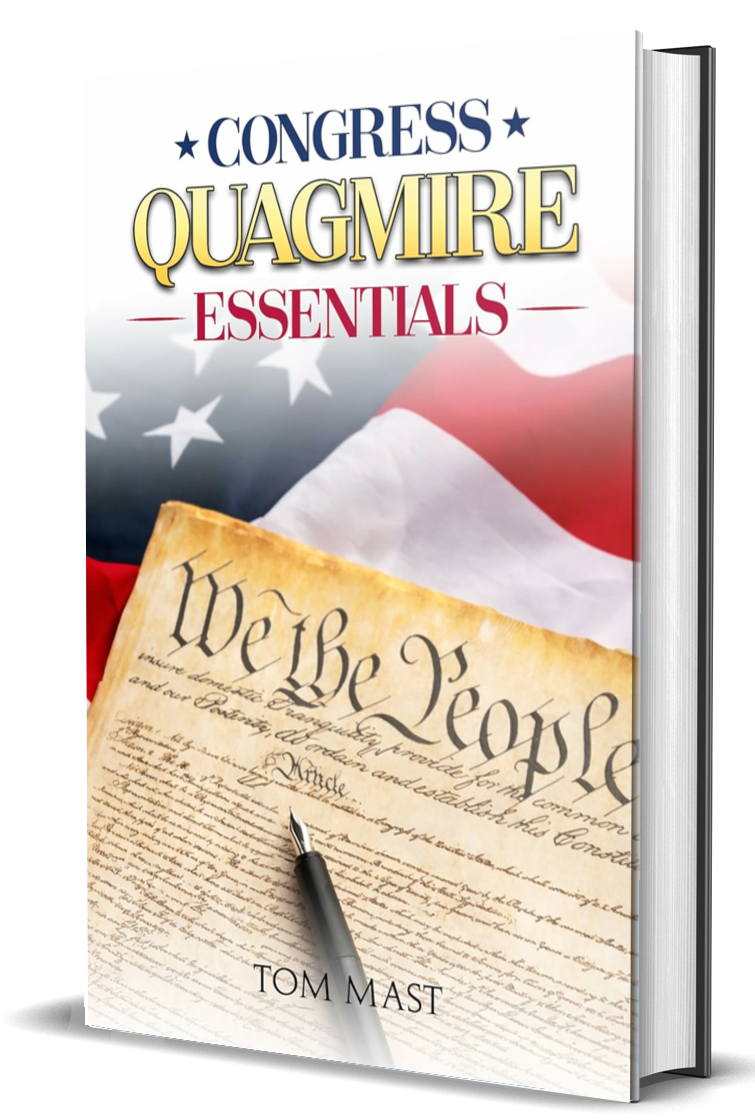
In Congress’s Quagmire Essentials: What Every Citizen Should Know, Tom Mast examines the decline of regular order as part of a larger problem involving party power, polarization, careerism, block voting, electoral competition, and Congress’s failure to solve major national problems.
The book helps citizens understand not only what Congress is doing, but why its methods of operating matter to the quality of government Americans receive.