For most Americans, congressional elections appear to offer a familiar choice between two major political parties. Those parties have dominated the House and Senate for generations. The question is whether such limited political competition affects how Congress behaves once the election is over.
Competition matters in almost every institution. Businesses respond to competitors. Professionals must prove their value. Political parties also respond to incentives. When two parties are virtually assured that nearly every congressional seat will belong to one or the other, the struggle can become less about competing with new ideas and more about defeating the opposing party.
That affects governing.
When control of Congress is closely divided, each party has a strong incentive to protect its members, strengthen party loyalty, and win the next election. Members can face pressure to vote with their party even when compromise might produce a better result. Legislative victories may become measures of party success rather than measures of whether Congress solved an important national problem.
The result can be block voting, hostility, repeated reversals of policy, and difficulty addressing problems that require years of steady attention.
Federal debt provides one example. Social Security, Medicare, immigration, budgeting, and other national concerns also require negotiation and solutions that can survive changes in political control. When one party gains power and attempts to reverse what the other recently enacted, Congress can resemble a see saw rather than a stable problem solving institution.
America did not always operate with such rigid political divisions. During much of the twentieth century, both major parties contained conservative and liberal wings. Members often had to work across party lines because ideological differences existed within the parties themselves. Cooperation was necessary to pass significant legislation.
Greater political competition could change congressional incentives again.
If additional parties won enough seats to influence legislation, neither major party could always assume that it could govern alone. Coalitions might become necessary. Members would have stronger reasons to negotiate, listen to different viewpoints, and seek broader support.
More parties would not eliminate disagreement. Nor would they guarantee better government. Political conflict is part of representative government. The issue is whether the present system gives two organizations too much control over the pathway into Congress while leaving voters with too few competitive choices.
The condition of Congress should encourage citizens to examine not only individual politicians but also the electoral system that places them in office.
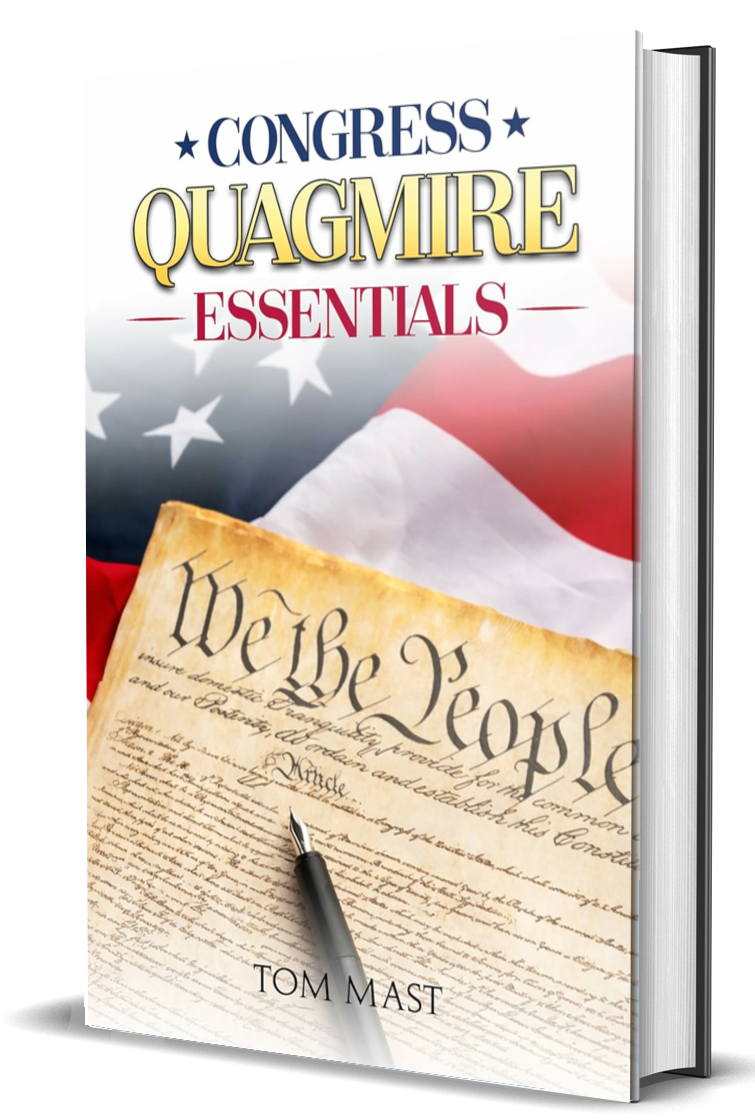
In Congress’s Quagmire Essentials: What Every Citizen Should Know, Tom Mast examines how the two party system, primary elections, safe seats, party loyalty, block voting, polarization, and limited electoral competition affect congressional performance.
The book presents the case that improving Congress requires looking beyond personalities and elections to the rules and incentives that shape political behavior. It gives citizens a practical basis for considering whether greater competition could produce a more cooperative and effective Congress.