The US national debt has quietly eclipsed $36 trillion, a figure so vast it almost ceases to feel real. Beyond the abstract math, this national debt represents a compounding liability that touches inflation, interest rates and the future economic opportunity of every citizen.
When discussing how America reached this fiscal tipping point, conversations usually center on government spending, tax cuts, emergency stimulus packages and entitlement funding. While those are the immediate mechanisms, they miss the underlying engine driving the pattern: the structural rules of American elections.
The Incentives Built Into the Ballot Box
Politicians do not operate in a vacuum; they operate within an incentive structure designed to win elections. Modern electoral mechanics, from primary structures to legislative redistricting, create powerful incentives to prioritize short-term spending over long-term fiscal stability.
In a hyper-competitive electoral landscape, candidates face a clear strategic calculus:
- Visible Short-Term Benefits: Promising immediate tax relief, localized infrastructure funding or expanded government programs yields instant support from voters and target constituencies.
- Invisible Long-Term Costs: The true cost of funding these promises through debt service is deferred decades into the future, long after current officeholders have left their seats.
When every incentive rewards spending today and deferring the bill until tomorrow, the structural result is persistent budget deficits, regardless of which party holds the majority.
Legislative Gridlock and the Deficit Cycle
Once elected, lawmakers enter a legislative system designed around institutional friction. Passing meaningful, long-term fiscal reform requires sustained bipartisan consensus, an outcome that current primary systems and hyper-partisan electoral pressures actively disincentivize.
Instead of structural reform, Congress frequently relies on short-term funding fixes, last-minute omnibus spending packages and recurring debt-ceiling brinkmanship. This cyclical gridlock prevents the implementation of comprehensive fiscal strategies, allowing the structural debt to compound year after year.
Understanding this cycle requires looking past political soundbites and examining the basic rules that govern Congressional decision-making.
Demystifying the Debt and Congressional Governance
For citizens looking to understand how these systems operate and what the national debt actually means for their financial future, clarity is hard to come by. The technical jargon surrounding federal accounting and Congressional procedure often masks the core mechanisms at play.
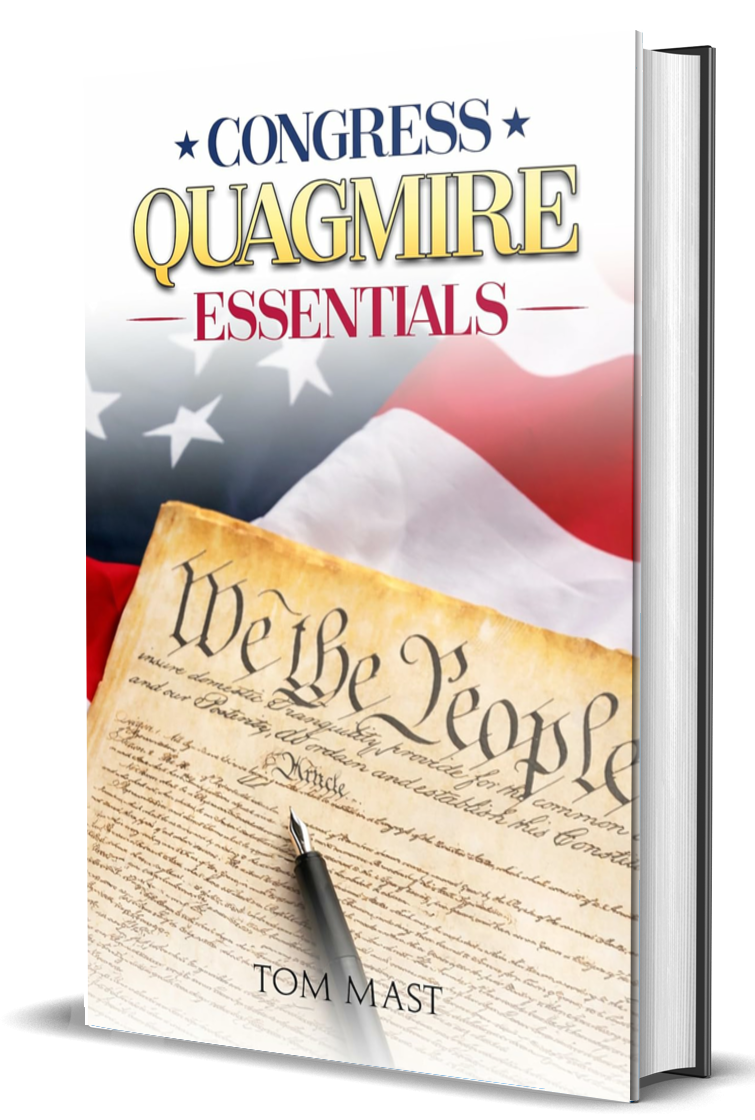
Author Tom Mast provides a clear, accessible breakdown of these complex systems in his two essential guides:
- Federal Debt Essentials: What Every Citizen Should Know: This book cuts through partisan noise to explain how federal debt is structured, who holds American debt, how interest obligations impact the broader economy and what realistic paths exist toward fiscal stabilization.
- Congress’s Quagmire Essentials: What Every Citizen Should Know: Mast examines the internal mechanics, incentives and procedural rules that govern Congress. The book provides readers with a straightforward look at why legislative gridlock occurs and how electoral structures shape fiscal outcomes.
Together, these books offer non-partisan, practical insights for any citizen who wants to move beyond surface-level political debates and truly understand the drivers behind America’s $36 trillion problem.
Moving Toward Informed Governance
The trajectory of the national debt is not merely a technical accounting issue; it is a structural challenge driven by the incentives embedded in our electoral and legislative systems. Addressing it requires an informed electorate that understands both the economics of federal debt and the political dynamics that perpetuate it.
By taking the time to understand these mechanics, citizens can better evaluate proposed policies, hold representatives accountable and engage meaningfully in the conversation surrounding America’s financial future.
Order Federal Debt Essentials on Amazon: https://www.amazon.com/dp/B0GX3B533B
Order Congress’s Quagmire Essentials on Amazon: https://www.amazon.com/dp/B0GX2WJTST